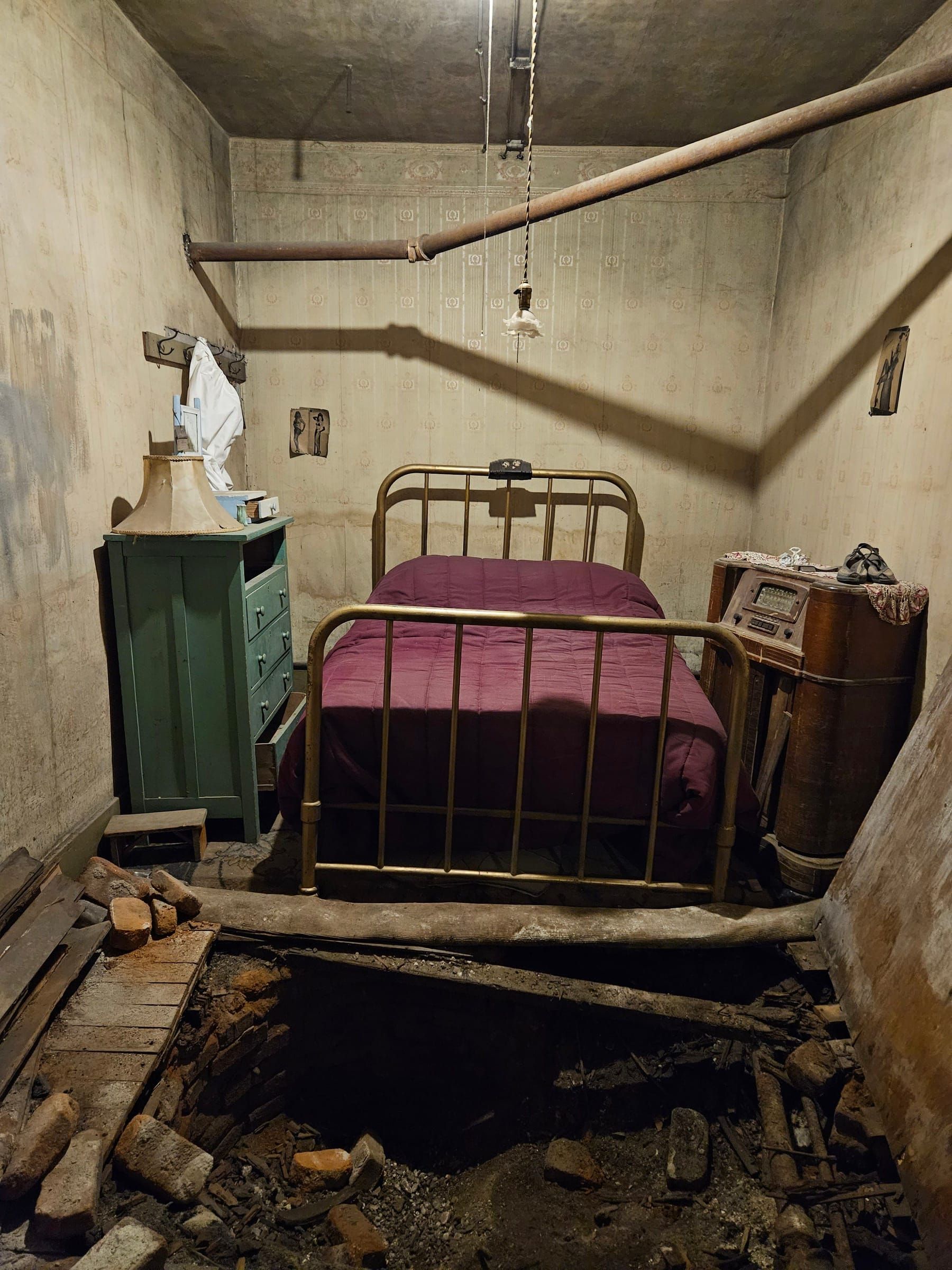
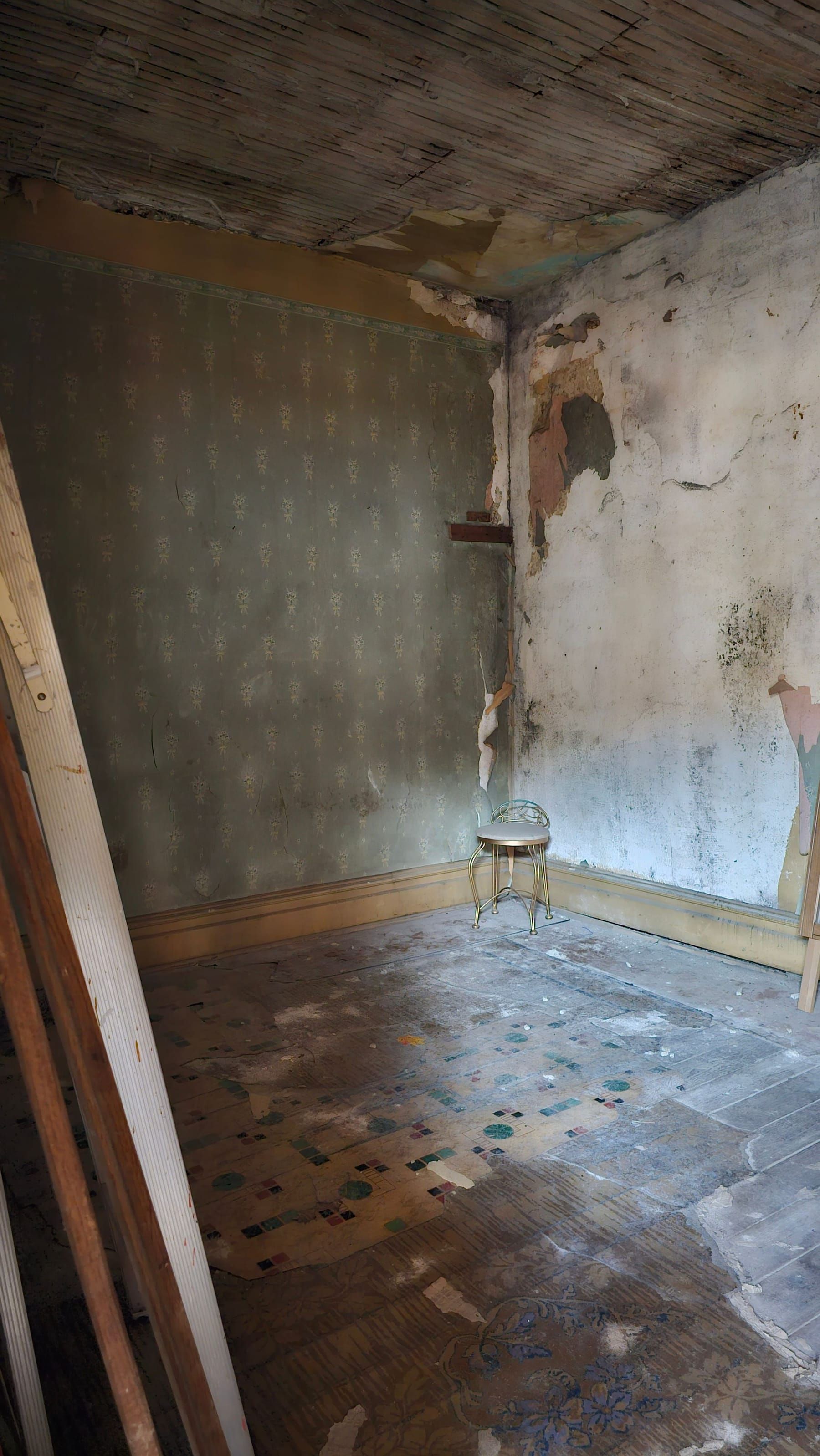
What you'll see · Site 01 of 03
The Front
Mercury Street was the polished face of the district: parlor houses where the evening began with a drink and a performance before any business was discussed.
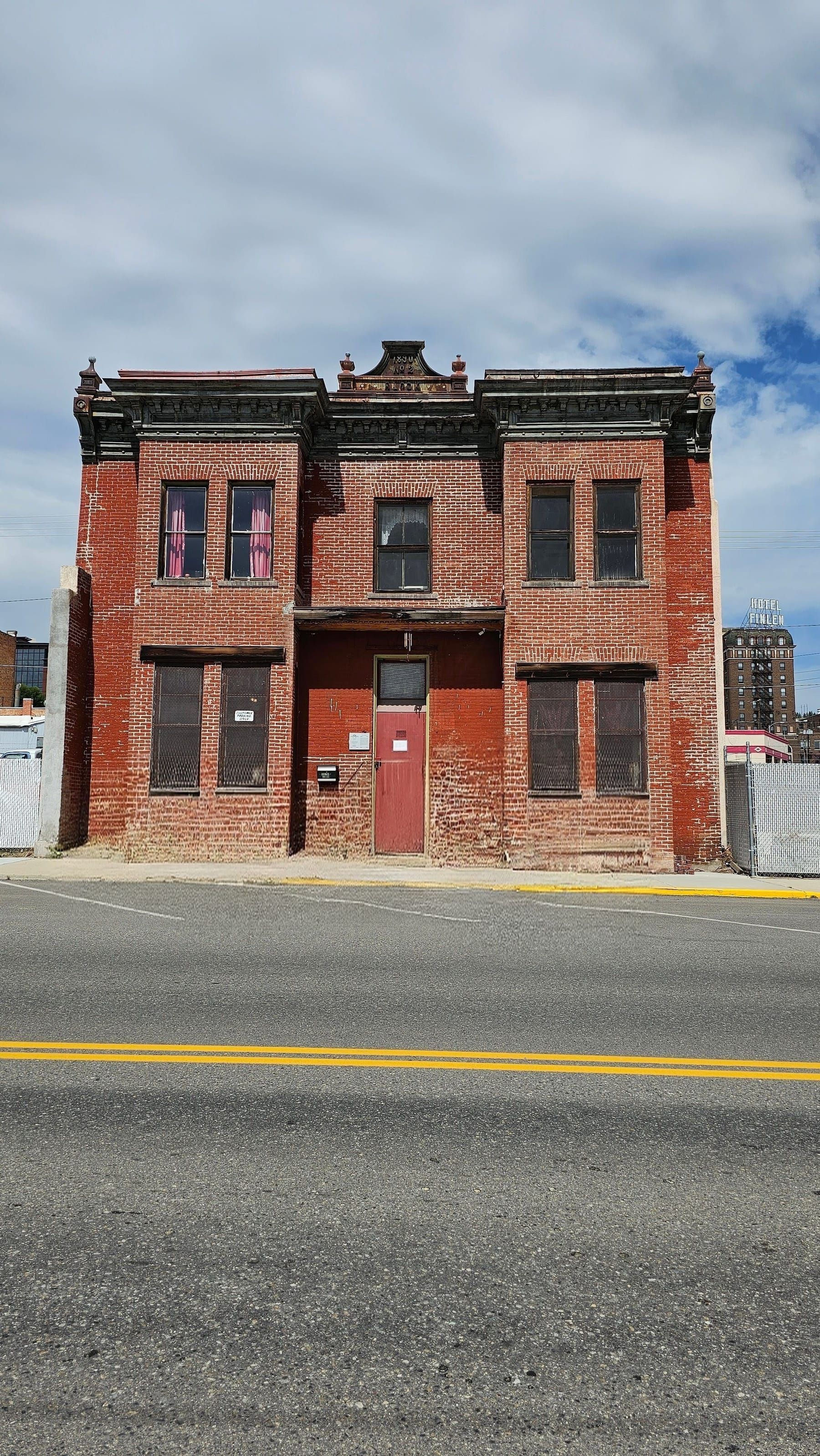 Mercury Street · the front of the Line
The story
One of the largest red-light districts in the American West.
Butte in 1900 was one of the wealthiest cities in the world, and one of the most exploitative. Thousands of miners arrived with money and appetite, and an economy of saloons, gambling halls, and a red-light district grew up to meet them. At its peak the district stretched along Mercury Street and the alleys behind it, and ranked among the largest in the American West.
Mercury Street was the front of it. Here stood the parlor houses, where an evening might open with music, drinks, and conversation before anyone went upstairs. One block over on Galena Street, the trade was cheaper and rougher. Between the two ran the alley where most of the women actually worked.
This is where the tour gets its bearings, not to romanticize the district or to judge it, but to ask who these women were, how they survived a place like Butte, what they built, and what was taken from them.
Primary source
Despite my shuddering horror, the sight fascinated even while it repelled me. It gripped me by the throat . . . and filled me with many sad forbodings.Madeleine, An Autobiography · 1919
Then & now
The front of the Line, a century apart.
Archival street view of Mercury Street's parlor houses beside the present-day block.
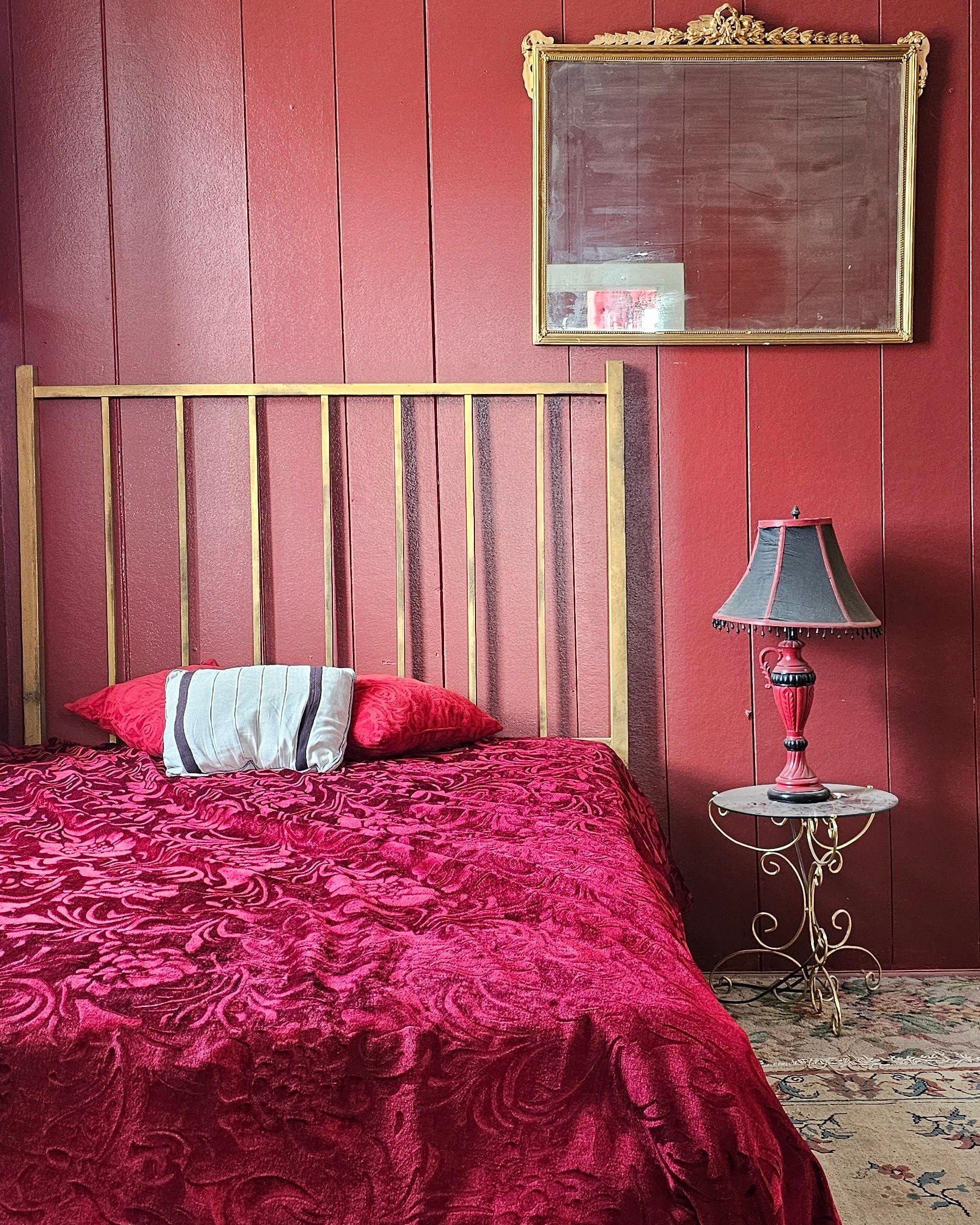 Archival · c.1900
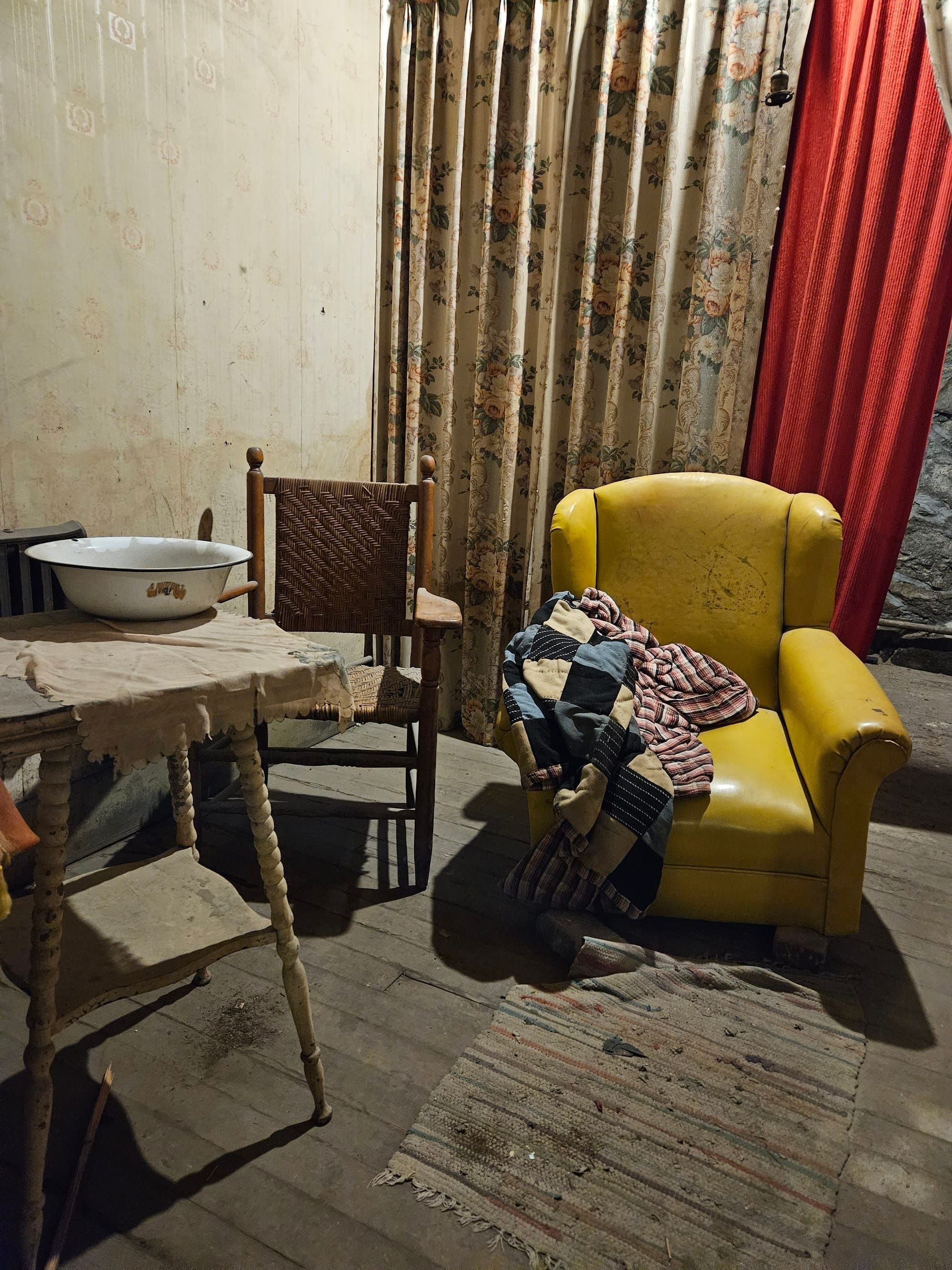 Parlor house detailPresent day
See it in person
Mercury Street is where both tours begin to find their footing.
Walk the Line traces it in daylight; After Dark returns to it after the sun goes down.